Showing posts with label India. Show all posts

Wednesday, June 20, 2012

Thung Kba

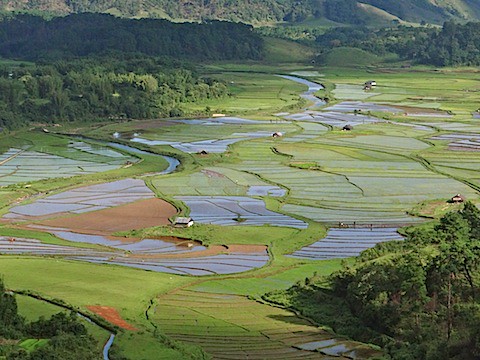
DSC04013A few days ago I went with my friend Ruhi to their rice field ('hali') where they were finishing planting their first crop of rice, now that the rains have arrived. I was interested to learn how to plant rice, and to learn more about the process, as it's one of the many things I've never done before. Rice is a pretty big part of life around here, as it's the main food crop, and knowing the process of rice farming gives me a better understanding of Pnar language and culture.

DSC03919When we arrived, work had already started. One of the guys showed me how to run the plowing machine that turns the soil to allow the water in and make the paddy field the right kind of mud for planting the rice seedlings ('kba'). After plowing, they showed me how to plant rice ('thung kba'), which refers literally to the process of punching your hand into the mud with a few seedlings so that it sticks. I was pretty slow compared to everyone else, but they humored me and seemed to be glad/surprised that I stayed and worked until all the paddy fields were planted.
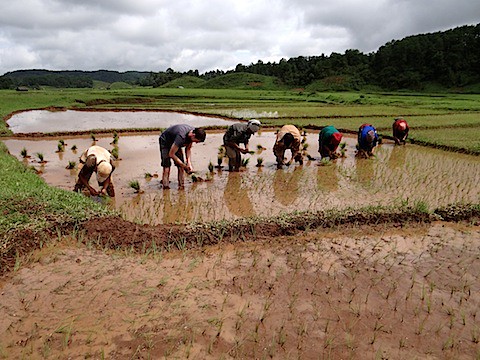
DSC03962It was a lot of fun, and it's been awhile since I've done that kind of work. It's back-breaking, particularly for someone my height, and reminded me of some of my days in construction. There's something about hard, physical labor that I really enjoy, maybe because you can see actual measurable results. And it was lots of fun because everyone was talking and joking and laughing. It made me wish I understood and spoke more Pnar so I could join in.
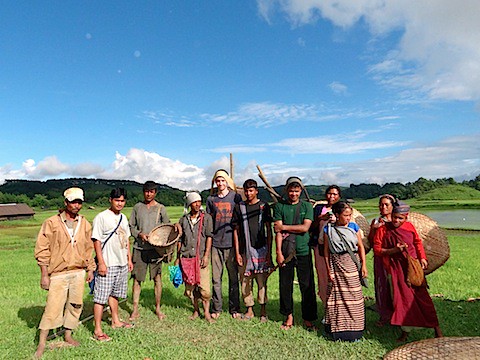
DSC04006After planting was done, we hung out by the little house the farmers use during planting time and as they are preparing to plant. It was good to relax and share a meal after a day of hard work and sunburn (at least on my part). Here's a picture with the whole group.

I've got some video, but the video site I use is down at the moment, so I'll upload it when I can and link to it on here.

EDIT: Here's the video below. http://youtu.be/ur4xtnWtwWw

Tuesday, May 15, 2012

Naming Ceremony

Last week I was invited by my friend Heibormi Sungoh to observe a traditional Jaintia naming ceremony in Shangpung, a town not too far from Jowai. This was the third and final part of the naming ceremony, and as things went along they explained bits and pieces to me.

The first thing that happened was the family arriving at the home where the event was taking place. The wife's family brought gifts of alcohol and food, and each person bringing items gave a greeting/invocation which the family responded to in kind. After some time, all the men of the family gathered outside the home, drank rice beer, and discussed the event. Once the event had been deliberated over, the gathering moved inside where all the women of the family were sitting and discussing. Then the invocation was given by the priest for 45 minutes or so.

The invocation is a sort of chant that apparently tells the story of the first birth and how the Pnar people got help from the plants and animals, in particular a certain kind of grass who helped them to deal with birth and began the naming process. During the chanting, the priest continued rubbing mustard seed oil on three blades of grass which he held between his fingers. Once the chanting had completed, he put one piece of grass above the door and cast the other two on the ground when recommended names were given. If the grass fell a certain way three times, the name was given to the child.

P5050004

P5050006Following this part of the ceremony, food was served, and the men once again convened after eating to continue their discussion of what had taken place. After some rice beer, the men reached some sort of agreement. The recordings I made still need to be analysed, but according to some of my friends they contain a lot of 'ktein kynnoh', which are idioms that are difficult to translate into English.

In the evening a local dance troupe came to present the traditional plate dance, and following the dance Heibormi and some other friends joined them with traditional music and song. I was able to film the whole thing, and here are a couple pictures of me with the group.

Sunday, April 15, 2012

Rongkhla Tiger Festival

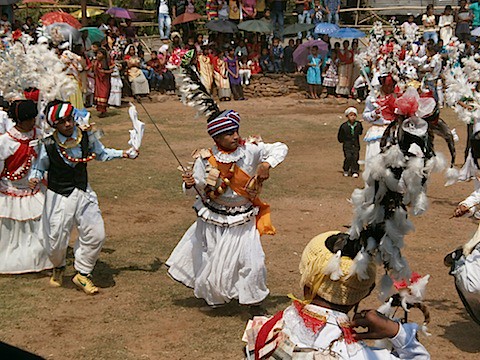
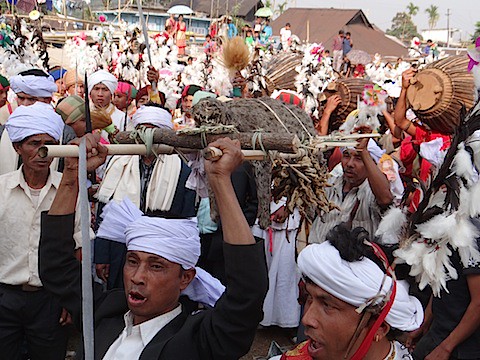
P3170028Last month some friends and I visited Nongtalang, a village south of Jowai where they speak the War language. My Pnar friends were going to document and record clips for the news channel, and I went along for the experience. A couple of my Australian friends came as well, since the event was a local festival that happens relatively rarely. This festival is called Rongkhla, and can only occur after a large cat has been killed ("khla" means 'tiger'). You can read more about the festival at my friend Rev. Mohrman's blog here.

DSC00263We really enjoyed the festivities - the dancers wore very colorful clothes and the music was lively. Most of the dancers wore traditional clothes, and people who liked their dancing would clip money to their shirts. It was quite an exciting experience. After the main event, the cat was carried down to the edge of town where the memorial stones stand, and at the end of the day the meat of the animal was thrown out to the onlookers. We were told that if you can eat a piece of the meat it brings good luck for the rest of the year.

For some video of the event (including where I got to drive on the Indian side of the road), check out this link or watch below: http://www.youtube.com/watch?v=5VVfpkjNkDE

Wednesday, March 14, 2012

Nartiang Monoliths

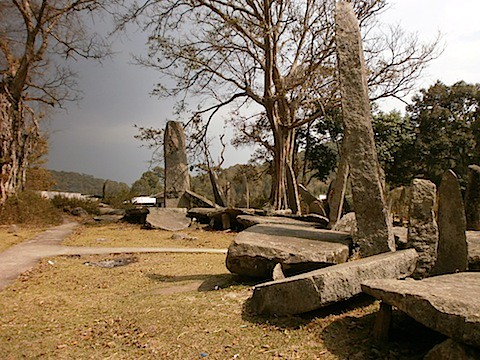
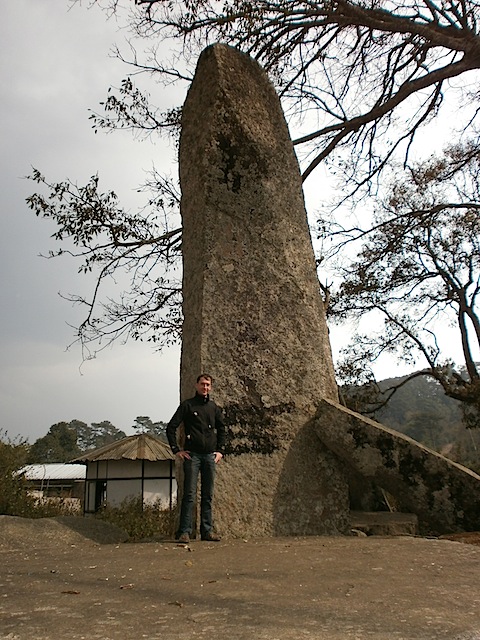
P3040001Last week my friend Ruhi took me along with some other friends to Nartiang, which was once the summer capital of the Jaintia kings, who ruled most of this area from the 1500's until they were deposed by the British East India Trading Company in the late 1800s. When the power shifted, trade shifted as well, so that the once-prosperous town of Nartiang is a quiet backwater.

P3040011However, it still boasts the finest collection of monoliths in the area, on a special site where the king's soldiers gathered and erected large stones and set huge flat slabs on smaller rocks to create stalls where people could display their goods and elders could gather for meetings. It was quite an incredible experience. From pictures I had seen the stones looked rather small, but once there for myself I could see that it was more like a giant's playground. Just to give you an idea of the scale, here I am standing on a huge rock slab next to one of the stones. If you come to northeast India, this is one sight you won't want to miss.

Below is some video from our visit: http://youtu.be/YDk-IwlIwfU

Thursday, February 23, 2012

Jowai

P2110013.jpgAfter a week in Shillong with some friends, I arrived in Jowai. This is a busy town that serves as the gateway from the Jaintia Hills district to the rest of India. There's a lot of coal mined in the area and all the big multicolored Tata trucks ply their slow way along the windy one-lane roads through the town. I spent one night with my friend Henry in Nongbah village, which is where Kiang Nongbah, the famous freedom fighter of the Pnar, hails from. I stayed in Henry's wife's house, which is just up the hill from the house where Kiang Nongbah lived, which is now home to the village headman. Henry told me that all of Kiang's family was hunted by the British, so that to this day no one knows who his descendants are.

P2160054.jpg

The next morning I returned to Jowai where some other friends helped me find a room near the Presbyterian Mission Hospital. I've enjoyed staying there for the past week or so, though the room is rather bare. At a local woodworking shop I ordered a small dresser, and another friend may be able to build me a rack for hanging clothes. My time has been spent working on a phonology paper and building a dictionary for Jowai-Pnar and getting example sentences. I'm hoping to begin recording traditional stories in the next week or two.

Tuesday, February 07, 2012

NEILS 7, Guwahati

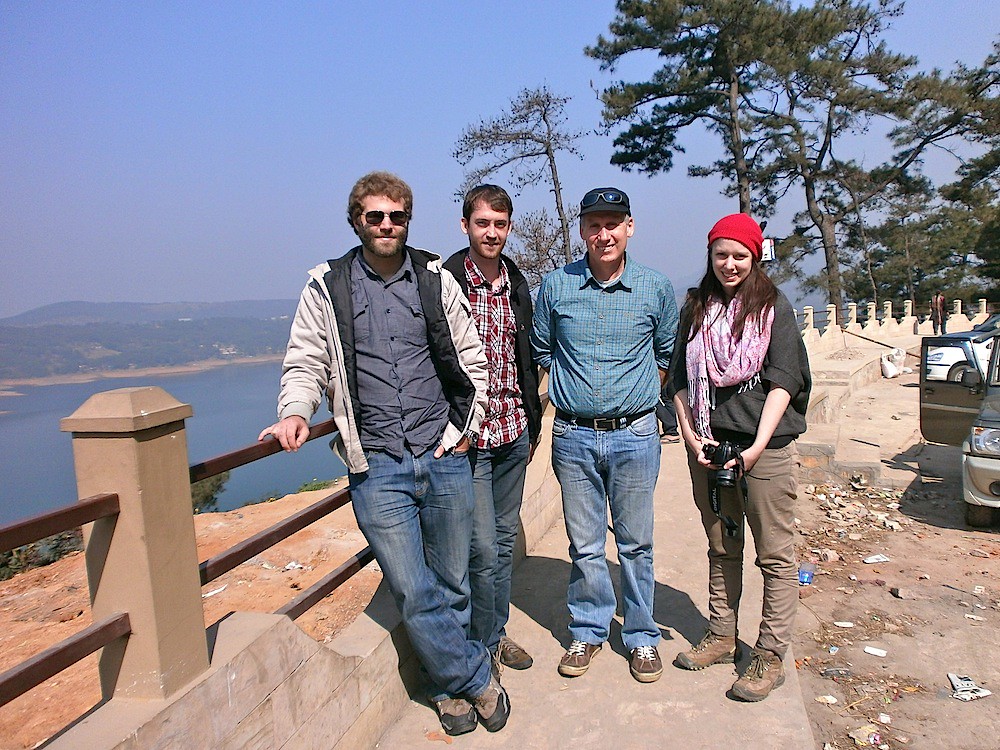
I arrived in India last weekend in time to attend the NEILS 7 conference. The abbreviation is short for the North-East Indian Linguistics Society, and this year there were quite a few great presentations on the many and diverse languages of the northeast area. I got to meet quite a few local linguists from Guwahati, as well as those from farther afield in India (JNU, Mysore, Kerala), from Switzerland, France, and a few working on Burmese languages, and quite a few from Australia (ANU and Melbourne U). It was great to meet others working in this area, and after the conference ended I got a ride from Guwahati to Shillong with some of the folks from ANU who will be working near Shillong. In the picture below from left to right: Peter Appleby, myself, Paul Sidwell, and Keren Baker, at a lookout point just outside Shillong.


xP2050025.jpg

Friday, September 02, 2011

Josh Garrels and Context

It has taken me awhile to write this post, but first let me say that if you haven't heard Josh Garrels' new album "Love, War, and the Sea In Between", you should check it out here: http://www.noisetrade.com/joshgarrels

I was really looking forward to hearing this album, as I've been kept updated by his newsletter and run into him in various times and places in the last couple years - Lancaster, Bushnell, North Carolina. So when he announced it was out and available as a free download, I got it. At the time, I was on fieldwork in India, and internet connection was a bit spotty so I sat in a friend's internet cafe in Shillong for 2 hours in order to get the whole (large) file. It's a testament to the world's increasing globalization that even that was possible, as it probably wouldn't have been even a year or two ago.

So this was the context in which I put my earbuds in, turned on my ipod, and listened to the whole album in one shot. And... it kind of fell flat. I wasn't sure what to think, since I've always liked the music Josh makes, and all the reviews I read beforehand had nothing but good things to say about the album. So I forgot about it and continued to work on documenting Pnar.

About a month later I had been in the US for my sister's wedding, which was pretty awesome, and after two weeks I was on my way to NYC to catch the airplane back to Singapore. On the greyhound bus I had just finished a large portion of the 40+ page paper I was working on, and needed a break. I found Josh's album on my ipod and started to listen. It was really good! I remember we had just got on the NJ turnpike to head into NYC, and I thought - "why is this so much better than when I listened to it in India?!"

It struck me that in India, a lot of the things that Josh writes/sings about, and even the music styles he uses, simply didn't connect with the world I was experiencing. It was as if the issues he deals with have no grounding in a non-western, non-american context. Which totally makes sense - I think how my music doesn't necessarily translate to people outside my own particular contexts. I think that speaks to the role of the artist as both a creator and reflector of culture, and thus how important it is to know the context to which you intend to speak, which Josh seems to have figured out pretty well.

At the same time, we would like to say that art transcends culture, and that this is our goal as artists. But how well does that work? Take your art outside your own culture and I guess you'll find out.

Monday, June 20, 2011

Cafe Shillong

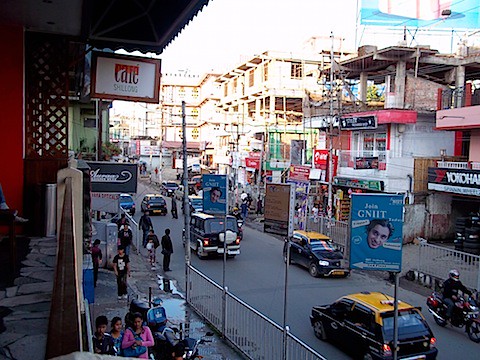
100_0529.JPGCafe Shillong is a great little cafe to visit if you are in Shillong. Good coffee, good food, and even wireless internet. I often go there if I want lunch/dinner and have some things to do online. In Laitumkrah, here's the view from one of my favorite spots on the balcony overlooking the street. Check it out next time you're in Shillong.

Thursday, June 09, 2011

India Week 3: Jowai

I recently got back to Shillong from Jowai, where I was gathering data on the main Pnar dialect. Jowai is the cultural and administrative centre of the Pnar community in Jiantia Hills, and I'll be focusing on learning to speak the variety of that place. I was able to connect with Ram, who is part of the Passah clan and very involved with the traditional religion. We were able to go down to the archery field where men shoot arrows at a target on a daily basis, and conduct some interviews about the origins of this event.

100_0556.JPGRam also showed me around the area - on Sunday we went to a waterfall further south of Jowai, toward Bangladesh, which was a lot of fun. The walk down was a bit slippery, but once down the water was cool and inviting. I swam up behind the waterfall and waved to Ram and his cousins on the other side. Here's me and the waterfall in all its glory.

Language data-gathering was also productive. Besides the interviews, I was able to collect a couple wordlists and a retelling of The Pear Story, following a technique used by my advisor Alec Coupe for collecting language in context to make grammatical structures easier to identify. I'll be working on translating these texts in the coming weeks and in analyzing the wordlists to acquaint myself with the phonology of Pnar.

Thursday, June 02, 2011

Mornings in Shillong

It's been raining a lot lately, being the monsoon season and all, which up here in the hills means it stays pretty cool. Apparently Cherrapunji, just south of where I am, is the rainiest place on earth, and near the end of monsoon season on a clear day you can look from there over the whole of Bangladesh, which looks like an ocean it's so flooded. But I digress.

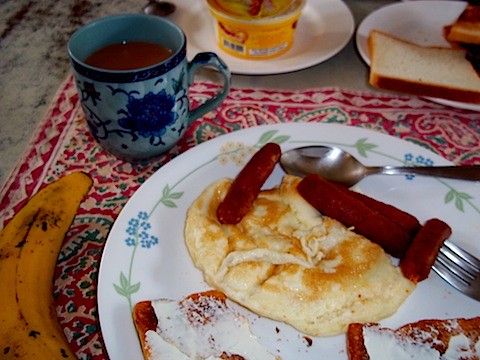
100_0475.JPGWhen I wake up in the mornings here in Shillong I go up to the kitchen where Durga usually has some tea made - Indian chai, with spices and milk and sugar. Hard to beat when combined with toast and whatever else is available (leftover grilled pork, anyone?). On Sundays breakfast is more substantial with eggs and sausages and beans etc... I leave you with a picture of toned-down breakfast.

Sunday, May 22, 2011

India Day 7: Shillong

Ok, it's been a few days since the last post, partly because I didn't always have internet access, and partly because I didn't do much except meet people and get to know the town a bit better. Also I forgot to bring my camera places, so I didn't have much in the way of visuals to offer. But now I'm back.

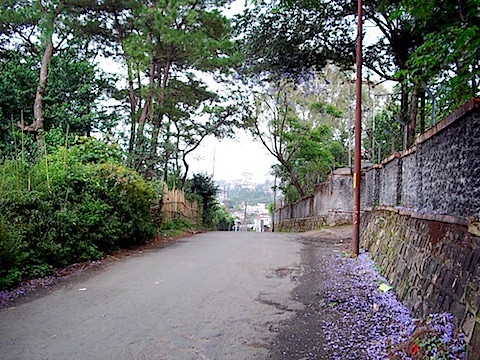
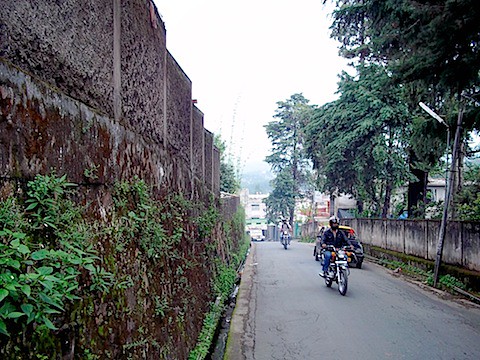
Shillong Road 1Shillong is a pretty town perched on a series of hills in the centre of Meghalaya. The streets are narrow, winding, and the buildings are perched precariously on the hills, squeezed tightly together and sometimes built almost on top of each other. In many ways it reminds me of a village in Europe. Taxis, trucks, cars, motorcycles and little buses negotiate their way along the streets along with pedestrians - there aren't very many bikes around here.

Shillong Road 2I've been spending some of my time with Mary, a local resident who is from Jiantia Hills where they speak Pnar. I'm learning some Pnar from her and she is helping me connect with some other speakers, and hopefully I'll be going to Jowai and the Jiantia Hills district this week. It's been fun, and we've been meeting at Swish, a local cafe. It takes about 15 minutes to get there by car, going in a bit of a circle. I discovered that there's a shorter way to go, cutting the angle, along a much less busy path that is only about a 15 minute walk (and more picturesque). I should really get a map of Shillong.

Thursday, May 19, 2011

India Day 2: Meghalaya

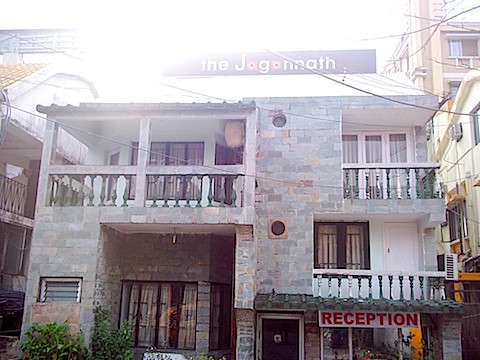
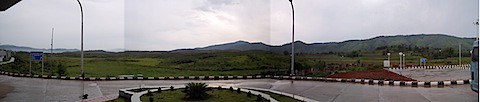
100_0433.JPGI woke up this morning after a good night's sleep at Hotel Jagannath (apparently this hotel is named after a Hindu sun god) and headed to the Calcutta airport to catch the plane for Shillong. We got off around the time listed on the itinerary and had a quick 1.5 hr flight to the airport which is actually 1 hour away from Shillong by car. Meghalaya is a beautiful part of India, in the highlands just north of Bangladesh, and below is a picture I took in front of the airport just after it rained.

Shillong Airport.JPG

It's pretty incredible how God works - I sat next to an elderly nun from Calcutta who was traveling to spend a month of the leave she gets every 3 years with her niece and nephews who live in Shillong. I talked with her on the flight and learned a lot from her about the area, and then helped her with her luggage and disembarking from the plane. She introduced me to her nephew when he arrived and they offered me a lift to Shillong, which I gladly accepted.

Along the way, her nephew John filled me in on some historical and political details of the area. It turns out that he is a local political figure very interested in the intersection of tribal and constitutional policy, and he knows a few of the people that I was hoping to get in touch with in the Khasi and Pnar communities. It was a great discussion and amazing to meet someone so well-connected in just my first hour in Meghalaya. Wow! I'll be getting in touch with him again once I get a SIM card for my phone.

I'm staying with my advisor's sister-in-law's family here in Shillong, and hope to connect with some Pnar speakers in the coming days, then head to Jowai and the Jiantia Hills at the end of the week to make more contacts. Today I also went to one of the local hot-spots, Cafe Shillong, which has great food and atmosphere. I'll be posting more about the town this week. It's been raining quite a bit for the last month, but is cool and peaceful - did I mention the northeast of India is beautiful?

Nongrim.JPG

Monday, May 16, 2011

India Day 1

Alright, I have internet access! I'm sitting in my hotel about 1km from the airport here in Calcutta (Kolkata) and thought I'd post a quick not before I crash. I didn't sleep much last night, what with the late flight to Delhi and then spending most of my layover trying to figure out where to go after I went through customs and was trying to re-check my luggage. I did have a whole row to myself on the Delhi-Calcutta leg, though, so I curled up and went to sleep as soon as we were airborne.

Calcutta AirportThe Delhi airport is actually really nice. I think they've done a lot since my friends were through there last. The Calcutta airport is a little bit more like the airports of my childhood. Here's a shot of me standing at the one baggage claim in the terminal we flew into. What's funny about that is - see that fake grass? Just after I took that shot all us passengers watched as a cat jumped onto the turf, felt around and then took a dump right on the 'grass' before jumping off and going about its other business. Everyone around that saw it chuckled.

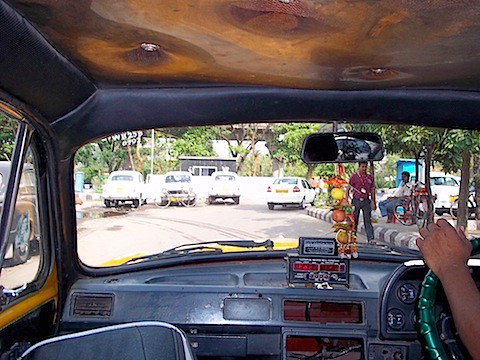
Calcutta CabI then took a cab from the airport to my hotel. Here's the view from inside the cab. They use these really classic diesels, painted yellow - they look more like English cabs of the 1920s or so. And they feel about that old too. As usual, lane changes are frequent (lines are more of a suggestion) and the road gets shared by everyone. My cabbie took a few minutes for chai just after starting the engine, and then we took a slight detour on the side of the road so he could yell at someone - maybe for directions, it's hard to tell.

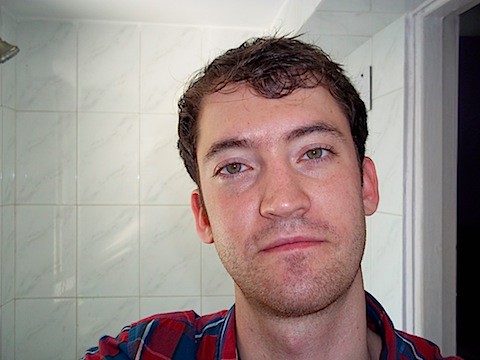
Hiram selfAnd finally, here's a picture of me in my bathroom at Jagganath hotel. It's not a very big hotel, but things are clean and after resetting the router we got some internet working. Gotta love it. You can see I (mostly) look none the worse for having slept so little. BUT I think I'll take a nap or something... tomorrow's another big day.

Getting Ready for India

The last week or so has been busy with getting ready to go to India. After talking things over with some of the other profs, my advisor suggested that instead of trying to confirm in May, I should plan on going through confirmation in the first week of August. This works for me, especially with my sister's wedding in July, back in the US. So I'm heading to India today for about 6 weeks, to learn as much about the language as I can and hopefully have something to present by August.

I moved out of my apartment on Friday, and my friend Nick is kindly letting me spend the weekend with him and storing my stuff at his place while I'm gone. Tonight my flight leaves at 11pm for Delhi, and today I'm just packing and printing off receipts and other things like my traveler's insurance. You never know what could happen, but I'm pretty positive it will be a grand adventure with no mishaps. If you think of me you can send up a prayer.

I'll try to update this space with photos and information about my trip, depending on what the internet connection is like. Of course, with today's internet-connected world, I might even be able to update when I'm in remote villages ('remote' here being defined as "physically hard to get to"). Unfortunately, friends of mine have been through the Delhi airport and said it wasn't a great experience - I have something like a 6 hour layover there... ah well.